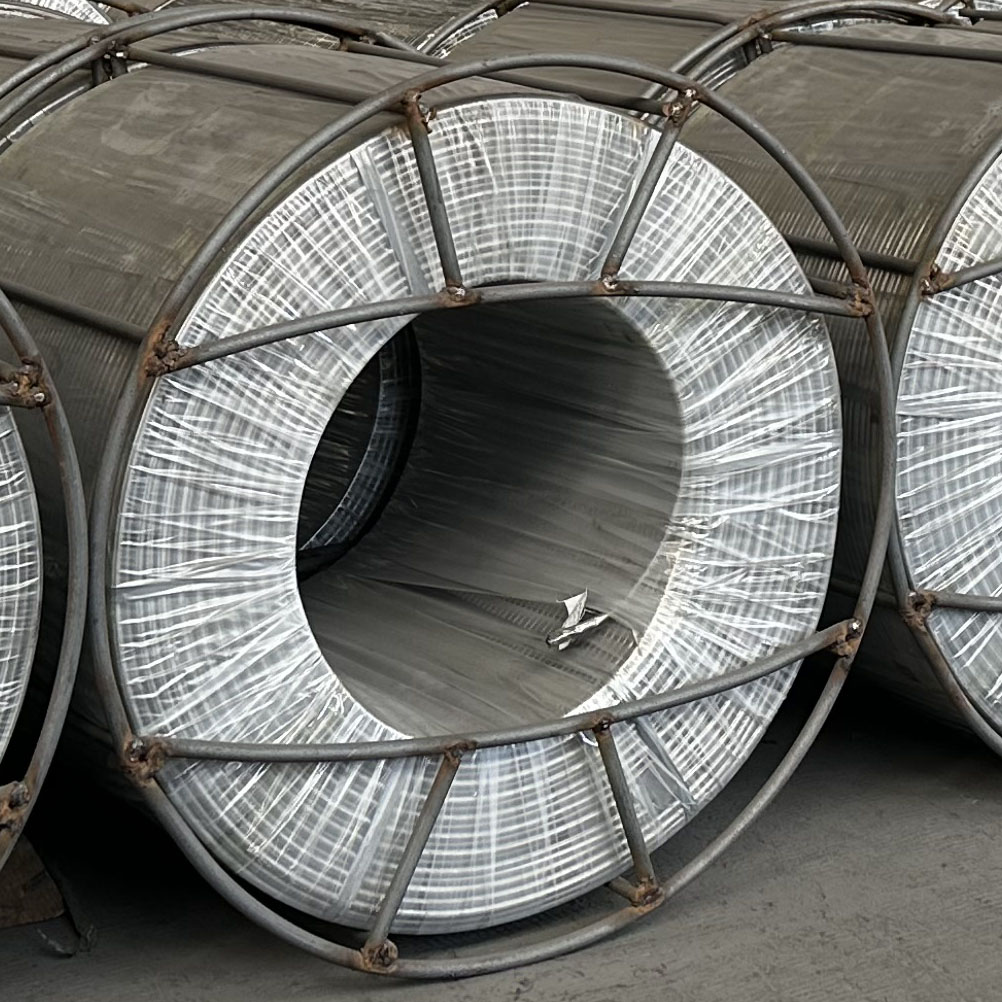
A metallurgical manufacturer offered a detailed explanation of cored wire, helping us gain insight into how it is produced.
The manufacturing process of cored wire consists of several stages: preparing raw materials, weighing and blending ingredients, processing the core filler, wrapping and shaping the wire, cooling and setting, drawing and straightening, conducting quality checks, and finally packaging and storing the finished product. Each of these stages plays a critical role in determining the final product's quality.
The presentation also covered the many uses of cored wire. In practice, it is widely applied in steelmaking and foundries for purposes such as deoxidizing molten steel, removing sulfur, adjusting alloy composition, and modifying non-metallic inclusions.
Using wire feeding equipment, cored wire can be placed precisely into the molten steel. Once the steel outer shell melts, the core material dissolves at the right location and triggers chemical reactions. This method effectively prevents unwanted reactions with air and slag, thereby significantly enhancing the absorption efficiency of the smelting materials.
The manufacturing process of cored wire consists of several stages: preparing raw materials, weighing and blending ingredients, processing the core filler, wrapping and shaping the wire, cooling and setting, drawing and straightening, conducting quality checks, and finally packaging and storing the finished product. Each of these stages plays a critical role in determining the final product's quality.
The presentation also covered the many uses of cored wire. In practice, it is widely applied in steelmaking and foundries for purposes such as deoxidizing molten steel, removing sulfur, adjusting alloy composition, and modifying non-metallic inclusions.
Using wire feeding equipment, cored wire can be placed precisely into the molten steel. Once the steel outer shell melts, the core material dissolves at the right location and triggers chemical reactions. This method effectively prevents unwanted reactions with air and slag, thereby significantly enhancing the absorption efficiency of the smelting materials.